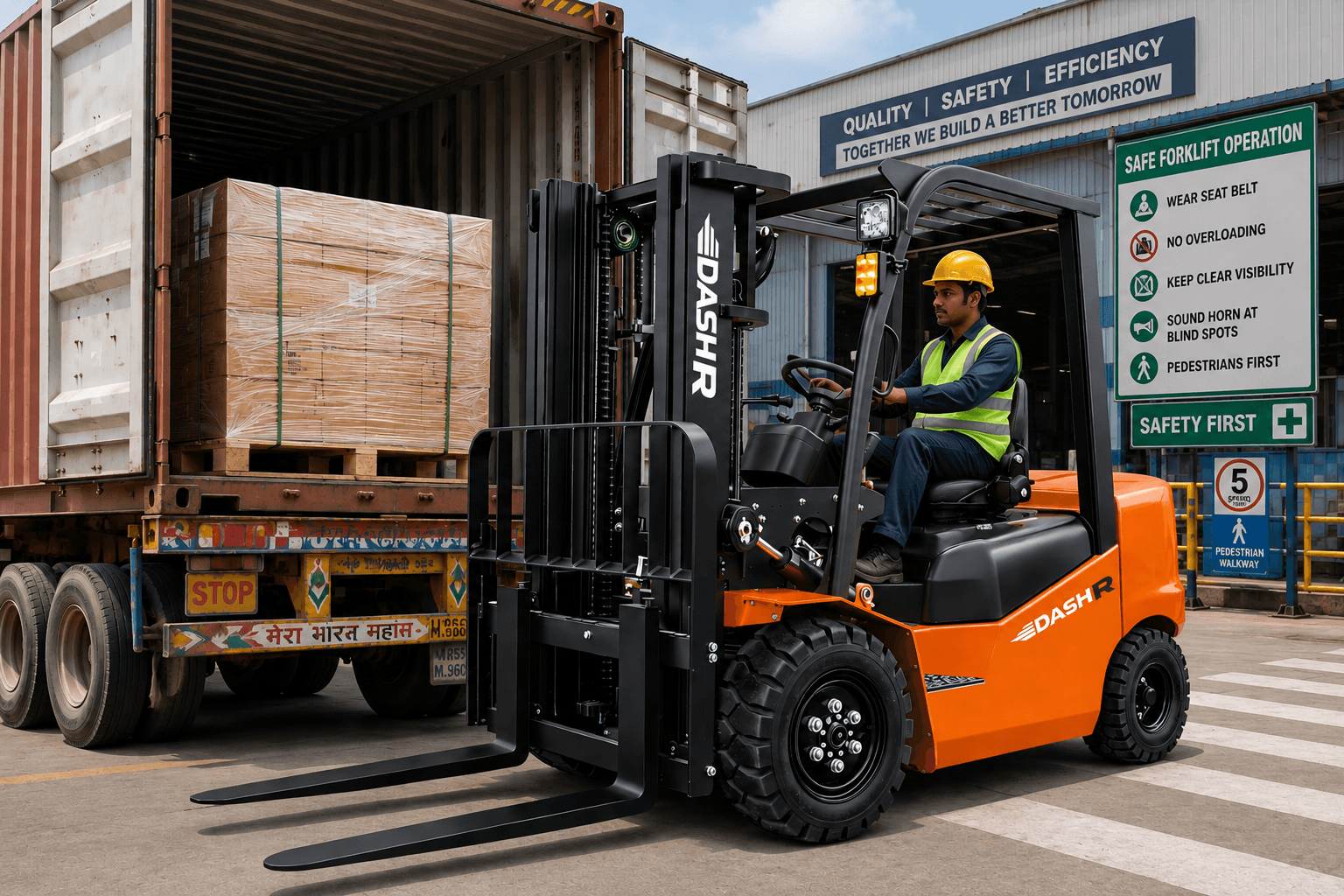
Forklifts are one of the most essential machines in warehouses, manufacturing units, logistics hubs, and industrial facilities. While they make material handling faster and more efficient, improper operation can lead to serious accidents, product damage, and costly downtime.
Following the right safety practices not only protects operators and pedestrians but also extends the life of the forklift. Here are the key precautionary measures every workplace should follow.
Forklifts should only be operated by trained and authorized personnel. Operators must understand the controls, load limits, braking system, and emergency procedures before handling the equipment.
Before starting work, inspect the forklift for:
Any defects should be reported immediately.
Overloading can make the forklift unstable and increase the risk of tipping over. Always check the load capacity mentioned on the forklift's data plate.
Ensure the load is properly balanced and secured before moving. Uneven or loose loads can fall during transport and cause injuries or damage.
Avoid sudden acceleration, sharp turns, and harsh braking. Reduce speed while turning, entering blind corners, or driving on uneven surfaces.
Always keep a clear view of the travel path. If the load blocks forward visibility, drive in reverse whenever it is safe to do so.
Sound the horn when approaching intersections, doorways, or areas with limited visibility to alert nearby pedestrians.
Travel with the forks approximately 150–200 mm above the ground. Raised forks reduce stability and increase the risk of accidents.
Never allow people to stand or walk under raised forks. Follow designated pedestrian walkways and maintain a safe distance at all times.
Operators should wear:
When not in use:
Routine servicing helps identify worn components before they fail, reducing downtime and ensuring safe operation.
Forklift safety is a shared responsibility. By following these precautionary measures, businesses can reduce workplace accidents, improve operational efficiency, and extend the lifespan of their equipment. A well-trained operator and a properly maintained forklift are the foundation of a safe and productive workplace.
Whether you need Diesel Forklifts, Electric Forklifts (Lead-Acid & Li-ion), LPG Forklifts, or expert maintenance support, DASHR Material Handling Solutions Pvt. Ltd. offers dependable solutions tailored to your warehouse and industrial needs.
