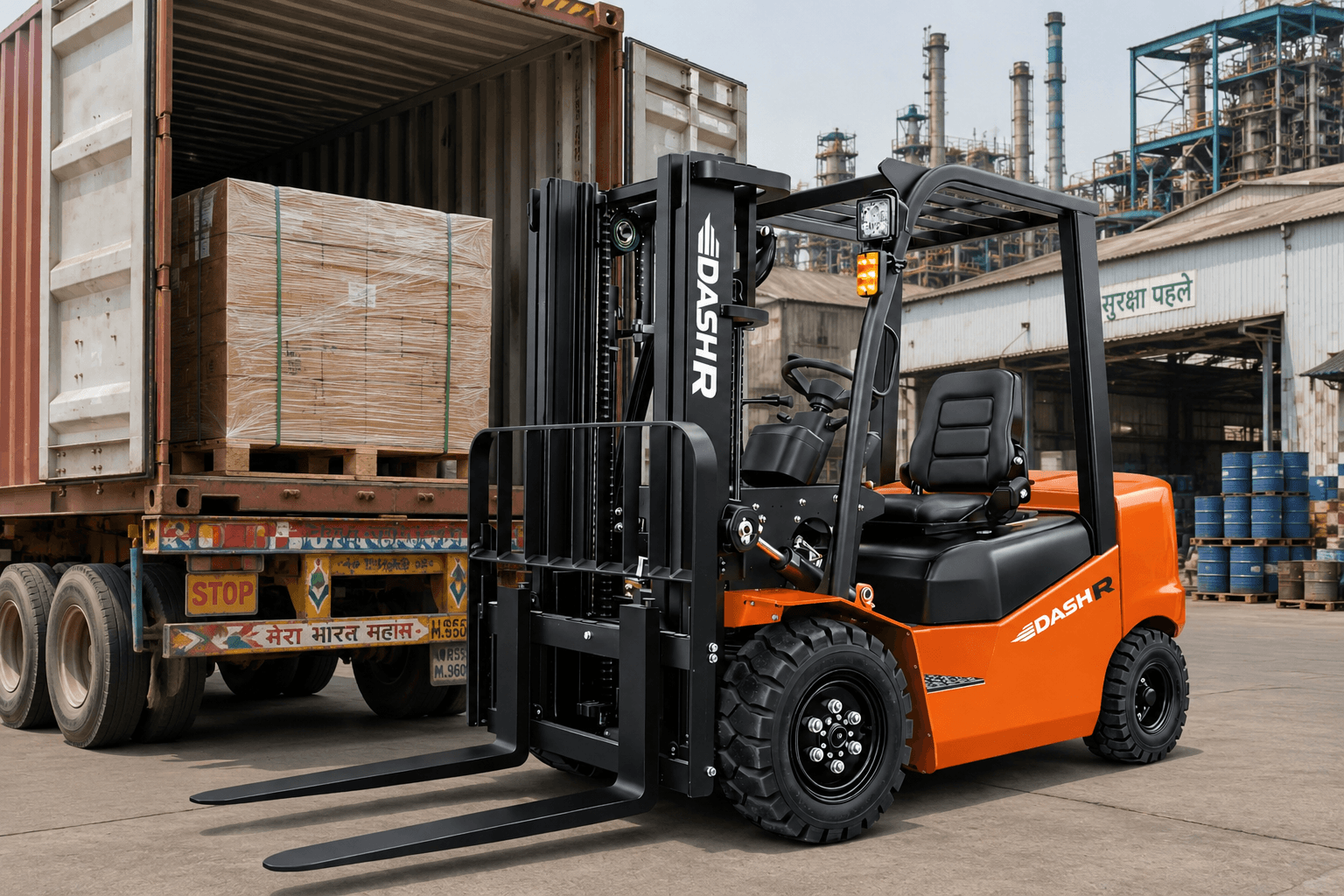
So you're in the market for a forklift. Maybe your current one's on its last legs, maybe your warehouse just outgrew what you're working with, or maybe you're setting up operations from scratch. Either way, here's the honest truth: there's no single "best" forklift out there. There's only the right forklift for your operation — your load, your space, your budget.
Get that match wrong, and it shows up later as wasted lifting capacity, safety headaches, or a machine that simply can't turn in your aisles. We've walked enough businesses through this decision to know exactly where people get stuck, so here's a practical, no-fluff guide to help you get it right the first time — whether you're comparing an electric forklift, a diesel model, or looking at forklift dealers in Delhi NCR and beyond.
1. Start With Your Load, Not the Machine
Before you even start comparing forklift models, get honest about what you're actually lifting day to day.
- Maximum load weight — not your average load, your heaviest one. A forklift rated below your peak load isn't cutting it close; it's a safety risk waiting to happen.
- Load dimensions — bulky, long, or oddly shaped loads often need longer forks or a wider carriage than a standard setup.
- Load center — this is the distance from the forks to the load's center of gravity. Most forklifts are rated at a standard 24-inch load center. If your loads are longer or the weight sits unevenly, your real-world capacity drops below what's printed on the nameplate.
Here's the thing most people miss: that "rated capacity" on the spec sheet is based on ideal, textbook conditions. Real warehouses rarely work that way — so this is usually where the wrong forklift gets picked. Not sure what capacity fits your loads? Talk to our team before you shortlist anything.
2. Think About Where It'll Actually Work
The environment matters just as much as the load itself.
- Working indoors (warehouses, factories, retail distribution centers)? An electric forklift is usually your best bet — no exhaust fumes, quieter running, and noticeably lower running costs over time. They're built for smooth, flat warehouse floors and are a popular choice among businesses looking for warehouse equipment that's easy to maintain.
- Working outdoors (yards, construction sites, loading docks)? Diesel or LPG forklifts generally handle uneven ground, slopes, and weather better than electric ones. If the terrain gets genuinely rough, look specifically at rough-terrain forklifts — they're built with bigger tires and tougher suspension for exactly this kind of job.
- Working in narrow aisles or tall racking systems? Reach trucks or narrow-aisle forklifts are made to maneuver tight spaces while still lifting to serious heights — which matters a lot if your warehouse racking systems go vertical to save floor space.
Browse our full forklift range to see which type fits your setup, or reach out if you'd rather just describe your space and let us point you in the right direction.
3. Check Your Lift Height Needs
Easy to underestimate, expensive to get wrong. If you're using racking systems or mezzanine floors, your forklift needs to comfortably reach your highest storage level — with a bit of clearance to spare, not right up against the limit.
Also worth double-checking: ceiling height and door clearances at your facility, especially since the mast sits taller when raised than when lowered.
4. Match the Aisle Width
Every forklift needs room to turn, and how much room depends on its size and type. Measure your narrowest working aisle before you shortlist any forklift model. A machine that looks perfect on a spec sheet but can't actually turn in your aisle is one of the most common — and most avoidable — mismatches we see.
5. Factor In Usage Frequency and Duty Cycle
- Light, occasional use (a couple of hours a day)? A smaller, entry-level electric forklift usually does the job, and it's easier on your budget too.
- Heavy, round-the-clock use (multi-shift operations)? You'll want equipment built for a higher duty cycle, with a battery or fuel setup that keeps pace without long downtime.
- Running multiple shifts? Look into battery swap systems for your electric forklift so machines aren't sitting idle mid-shift waiting to charge.
6. New vs. Used Forklifts
Both have a place, honestly.
- New forklifts come with full warranties, the latest safety features, and zero unknown history — a safer bet if you're running heavy, daily-use operations.
- Used forklifts can be a smart, budget-friendly pick for lighter or occasional use, as long as they come with a clean maintenance history and have actually been inspected properly, not just wiped down and photographed.
Whichever way you go, always ask for service records. A forklift's real story is in its maintenance history, not just its odometer hours. Check our current forklift options — new and used — to compare what's available.
7. Don't Ignore the Total Cost of Ownership
The sticker price is only one part of the equation. Also weigh in:
- Fuel or electricity costs over the years
- Routine maintenance and spare parts availability
- Tire replacement — more frequent than most people expect
- Operator training requirements
- Resale value down the line
An electric forklift usually costs more upfront but less to run. A diesel model might be cheaper on day one but adds up in fuel and servicing over time. The right call really comes down to how hard and how often you'll be using it.
Quick Checklist Before You Buy
- Confirmed maximum load weight and load center
- Decided indoor vs. outdoor use
- Measured required lift height against your racking or mezzanine floor
- Measured your narrowest aisle width
- Estimated daily/weekly usage hours
- Compared new vs. used options with service history in hand
- Worked out total cost of ownership, not just the purchase price
Still Not Sure Which Forklift Fits Your Operation?
Honestly, this is exactly the kind of call where a quick conversation saves you from an expensive mistake later. As a material handling equipment supplier working with businesses across Delhi-NCR and pan-India, DASHR helps you match the right forklift — electric, diesel, reach truck, or rough-terrain — to what your operation actually needs, not just what fits a budget on paper.
Explore our full range of forklifts →
Get in touch with our team →
Still have queries? Check our Forklift FAQs →